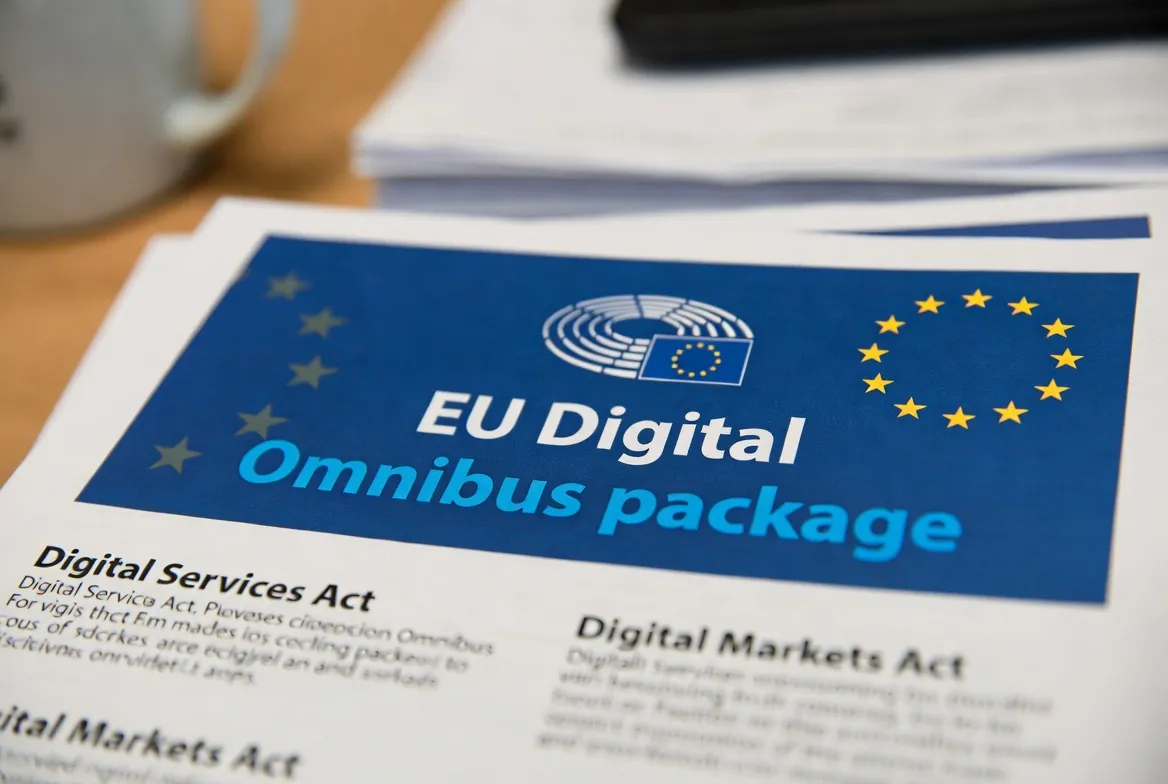
Digital Omnibus on AI - European Parliament Plenary Vote

Digital Omnibus on AI: EP Adopts Position (569 Votes)

On 26 March 2026, the European Parliament voted in plenary on the Digital Omnibus on AI with 569 votes in favour, paving the way for trilogue negotiations. Analysis of the positions of the Commission, Council and Parliament on high-risk AI system deadlines, the nudification ban and the implications for businesses and professionals.

27 March 2026 · 8 min · NicFab
AI Ethics in Education - European Parliament Briefing

AI Ethics in Classrooms: When Principles Meet the Law

The European Parliament publishes a briefing on the ethical dimensions of AI in classrooms. We analyse the document through the lens of a legal practitioner, connecting ethical principles to the existing European regulatory framework and digital competence frameworks.

25 March 2026 · 13 min · NicFab
Digital Omnibus on AI - Council and Parliament trilogue negotiations

Digital Omnibus on AI: Council and Parliament Align Mandates as Trilogue Negotiations Begin

The Council adopted its general approach on 13 March 2026, and IMCO and LIBE approved their joint report on 18 March. A comparative analysis of the two negotiating mandates: convergence on fixed deadlines and a ban on sexual deepfakes, divergence on the transitional period for AI marking and the scope of the AI Office.

25 March 2026 · 13 min · NicFab
AI Act regulatory sandboxes between legal obligation and implementation gap

AI Act: Regulatory Sandboxes Between Legal Obligation and Implementation Gap

As of August 2025, only one Member State out of twenty-seven had an operational AI regulatory sandbox. A critical analysis of the structural challenges — design, fragmentation, and timing — and the risk of sandbox shopping, based on the sources cited in EPRS document PE 785.673 and linked to the hybrid enforcement model of the AI Act.

20 March 2026 · 13 min · NicFab
Hybrid AI Act enforcement between rules and reality

AI Act: A Hybrid Enforcement Model Balancing Regulations and Reality

As of March 2026, only 8 out of 27 Member States had designated their single points of contact pursuant to Article 70 of the AI Act. A critical analysis of the hybrid enforcement model, its structural comparison with the GDPR, and the implications of the Digital Omnibus for AI.

19 March 2026 · 9 min · NicFab
Copyright and generative artificial intelligence

Copyright and Generative AI: The European Parliament's Resolution Between Principles and Operational Gaps

The European Parliament adopted Resolution P10_TA(2026)0066 on copyright and generative AI on 10 March 2026. A critical analysis of its commendable principles and the operational gaps the Commission is now called upon to fill.

16 March 2026 · 8 min · NicFab
ePrivacy update 2022-2026

ePrivacy 2022–2026: CSAM Derogation and CSAR Update

From the withdrawal of the ePrivacy Regulation proposal to the second extension of the CSAM derogation approved by the European Parliament on 11 March 2026, through to the ongoing CSAR trilogues: a systematic update four years after the 2022 article.

13 March 2026 · 9 min · NicFab
Digital Omnibus on AI - European Parliament Draft Report

Digital Omnibus on AI: the European Parliament Rewrites the Commission's Rules

Comparative analysis of the IMCO-LIBE Draft Report PE782.530 (rapporteurs Kokalari and McNamara) against the Commission’s proposal COM(2025) 836: fixed deadlines replacing discretionary mechanisms, AI literacy obligation maintained on providers and deployers, strict necessity standard for sensitive data processing, presumption of conformity with the Cyber Resilience Act, and data protection authorities’ involvement in regulatory sandboxes.

10 February 2026 · 13 min · NicFab
Illustration of European artificial intelligence regulation

Search Engines and Artificial Intelligence: Between Technological Transformation and Emerging Risks

2025 closes with two publications that, read together, provide a comprehensive picture of the ongoing transformations in the online search sector. EPRS analyzes the macro-systemic impact on the open web, while Gartner focuses on the security risks of agentic browsers. The convergence of these perspectives reveals a transformation affecting online search as critical infrastructure, with implications for the digital market, data protection, cybersecurity, and the European regulatory framework.

29 December 2025 · 12 min · NicFab
European Parliament Study - Interplay between AI Act and EU Digital Legislative Framework

AI Act and EU Digital Legislation: A European Parliament Study Reveals Regulatory Complexity and Overlaps

A European Parliament study commissioned by the ITRE Committee analyzes the interactions between the AI Act and the EU digital legislative framework, highlighting regulatory overlaps, regulatory complexity and recommendations to ensure the competitiveness of the European AI industry.

30 October 2025 · 15 min · NicFab