
Markdown: From 2004 to the AI Era
Markdown is not just a formatting syntax. It represents a philosophy of digital independence, data portability, and long-term accessibility that aligns with the core principles of privacy and user empowerment.
Markdown is not just a formatting syntax. It represents a philosophy of digital independence, data portability, and long-term accessibility that aligns with the core principles of privacy and user empowerment.
On December 17, 2025, the European Commission publishes the first draft of the Code of Practice on the AI Act for marking and labelling AI-generated content. The document, structured in two sections dedicated to providers and deployers, establishes concrete rules to ensure transparency of deepfakes and synthetic content. Consultation open until January 23, 2026, with finalization expected by June 2026 and entry into force on August 2, 2026.

On December 9, 2025, the Council of the European Union agreed on an amendment to the EuroHPC regulation to create up to 5 AI Gigafactories. Complete analysis of the Cloud and AI Development Act and its three strategic pillars: research and innovation, data center investments, and European digital sovereignty.

On November 19, 2025, the European Commission published the Digital Omnibus on AI, a proposal to amend the AI Act introducing significant simplifications: flexible timelines, centralized governance at the AI Office, extension of privileges to mid-caps, and new rules on sensitive data processing for bias mitigation.
Video of the conference held on October 10, 2025 in Rome for the presentation of the book ‘Artificial Intelligence, Privacy and Neural Networks: The Balance Between Innovation, Knowledge and Ethics in the Digital Age’.
Disclosure requirements on AI systems for Italian professionals: A Free Tool for Compliance with Italian Law 132/2025 From October 10, 2025, in Italy, a new regulatory obligation will come into force for all professionals who use artificial intelligence systems in the course of their work. Article 13 of Italian Law 132/2025 introduces a transparency requirement that requires professionals to inform clients about the use of AI in clear, simple, and comprehensive language. ...

Italy’s first law on artificial intelligence: a historic turning point for Europe September 17, 2025, will go down in Italian legislative history as the day our country took a giant leap toward the digital future. With 77 votes in favor, 55 against, and two abstentions, the Senate definitively approved the first national framework law on Artificial Intelligence, making Italy the first country in the European Union with a national regulatory framework fully aligned with the European AI Act. ...
EU Commission Rejects «Stop the Clock» open letter appeal: AI Act Proceeds as Planned. Breaking from Friday, July 4: The clock is ticking, but it won’t stop. Over 50 European business leaders, including CEOs from Airbus, ASML, Mistral AI, Mercedes-Benz, and Siemens Energy, have signed a powerful “Stop the Clock - Open Letter” urging the European Commission to pause the next implementation phase of the EU AI Act, scheduled for August 2, 2025. ...
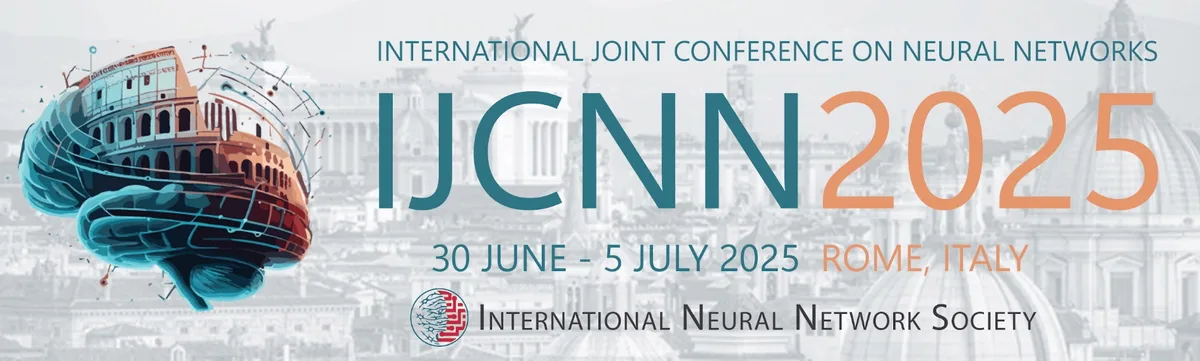
From June 30 to July 5, the International Joint Conference on Neural Networks 2025 (#IJCNN2025) was held in Rome at the splendid Pontifical Gregorian University, and I had the honor of participating. The conference officially opened on June 30 with tutorials and continued the following day with an inspiring ceremony at the prestigious Teatro Quirino. Danilo Comminiello, General Chair, kicked off the conference by laying the groundwork for what proved to be an exceptional gathering of minds in the field of neural networks and artificial intelligence research. ...

My interview as a podcast in Italian with Valentino Spataro in the program “Caffè 2.0, Tecnologia e Legal” (Coffee 2.0, Technology and Legal) is now online at caffe20.it. A conversation lasting over an hour dedicated to my new book “Artificial Intelligence, Privacy, and Neural Networks: The Balance between Innovation, knowledge, and Ethics in the Digital Age”, published in Italian (June 3) and English (June 11, 2025). A book born from practice During the interview, I had the opportunity to explain how this book was born from my experience in the field: from my role as President of the Data Protection Authority of the Republic of San Marino to my participation in some working groups of the CEN/CENELEC JTC21 for standardization and IEEE to my essential membership in the International Neural Network Society (INNS). ...